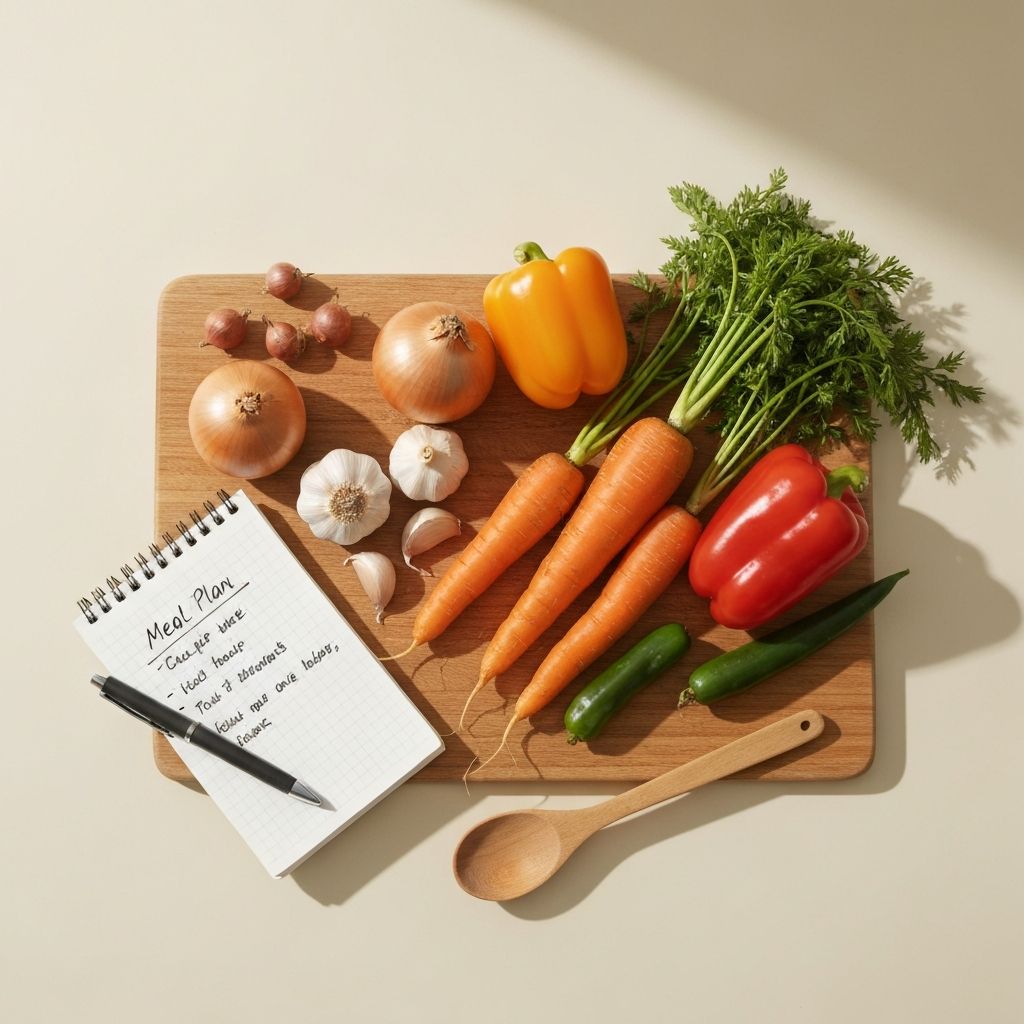
Most meal-planning advice on the internet was written by people whose full-time job is meal planning. This one wasn't. The strategies below come from real households — the ones balancing work, kids or grandkids, late meetings, picky eaters, and grocery bills that have crept up faster than paychecks. None of them require a label printer or a chest freezer. Pick the two or three that fit your life and ignore the rest.
1. Plan around your week, not a perfect week
The fastest way to abandon a meal plan is to design it for a version of your life that doesn't exist. Before you write a single recipe down, look at the actual week ahead:
- How many nights will you genuinely be home and willing to cook?
- Are there nights with appointments, sports, or late work?
- Is anyone away? Hosting?
For most households, planning four real dinnersworks better than seven. Leave the rest as flex nights — leftovers, breakfast-for-dinner, or a planned takeout slot. You'll waste less and feel less guilty.
2. Build meals from one anchor protein and two pantry staples
Cheap, repeatable cooking almost always follows a simple template:
One protein + one carbohydrate + one vegetable.
That's it. Roast chicken thighs, rice, and roasted carrots. Ground turkey, pasta, and a frozen vegetable medley. Eggs, potatoes, and whatever's wilting in the crisper drawer. Once you stop trying to cook "recipes" every night and start cooking combinations, weekly planning gets dramatically easier.
3. Shop your own kitchen first
Before you make a list, do a five-minute walk-through: pantry, fridge, freezer. You'll almost always find something that should anchor a meal — a half-used bag of rice, two cans of beans, a bag of frozen broccoli, leftover rotisserie chicken. Building even one meal a week from what you already own often saves $15–$25.
Households that do this consistently report cutting their grocery bill by 10–20% within a couple of months — not because they buy less food, but because they finally use what they buy.
4. Write a list and stick to it (with one small exception)
A written grocery list, used honestly, is one of the highest-ROI habits in personal finance. Studies of supermarket behavior consistently find that unplanned purchases — the things grabbed mid-aisle — make up a surprising share of total spend. The goal isn't to be rigid. The goal is to make a deliberate decision instead of an impulsive one.
Allow yourself one off-list item per shop. It scratches the spontaneity itch without blowing up the budget.
5. Cook once, eat twice (the "planned leftover" trick)
The most underrated meal-planning habit is intentionally cooking double on a night you're already cooking. A 9x13 pan of baked pasta becomes Monday dinner and Wednesday lunch. A whole roasted chicken becomes Sunday dinner and Tuesday tacos. You haven't added cooking time — you've just shifted it earlier.
Two practical rules make planned leftovers actually get eaten:
- Store them in clear containers, at eye level. If you can't see it, it dies.
- Plan a specific mealfor them, not just "leftovers." "Chicken tacos Tuesday" is much more likely to happen than "use the chicken somehow."
6. Use frozen and store-brand without apology
Frozen vegetables are picked at peak ripeness and flash-frozen, often within hours. Nutritionally they hold up extremely well against fresh — sometimes better, depending on how long the "fresh" produce sat in transport. They're also cheaper, last for months, and never go bad in a forgotten drawer.
Store brands have closed almost all the quality gap with name brands on staples like canned beans, pasta, oats, rice, milk, eggs, butter, frozen vegetables, and basic spices. Switching even half your staples to store brand typically cuts a grocery bill by 15–25% on its own.
7. Build a five-meal "greatest hits" rotation
You don't need 30 dinner recipes. You need 5–7 reliable ones your household actually likes, plus a few new ones each month for variety. Most households end up eating the same handful of meals on repeat anyway — the difference is whether they're doing it on purpose.
Sit down for ten minutes and write the list: the meals everyone in your home will eat without complaint. Use it as the backbone of your weekly plan. Add one new recipe a week. Keep the winners; quietly retire the rest.
A simple weekly rhythm to try
- Saturday or Sunday morning: 5-minute kitchen check, then write the list for 4 dinners (with planned leftovers covering 1–2 lunches).
- Shopping day: stick to the list, allow one off-list item.
- Mid-week:a flex night — leftovers, eggs and toast, or a planned takeout slot you've budgeted for.
- End of week:use up the "sad vegetable" drawer in a stir-fry, soup, or frittata before they go bad.
That's the whole system. It's not glamorous, and that's exactly why it keeps working when fancier plans don't.
This article is general lifestyle information, not nutritional or medical advice. For guidance on a specific diet — diabetes, heart conditions, food allergies, or weight management — please speak with a registered dietitian or your physician.